

How Do I Choose Between a Headstone and a Kerbed Memorial?
Headstone or Kerbed Memorial: What Is the Difference?
Choosing between a headstone and a kerbed memorial is a very personal decision. Both can create a beautiful and lasting place of remembrance, but they differ considerably in their appearance, the amount of the grave they cover, the scope for personalisation and the maintenance they may require.
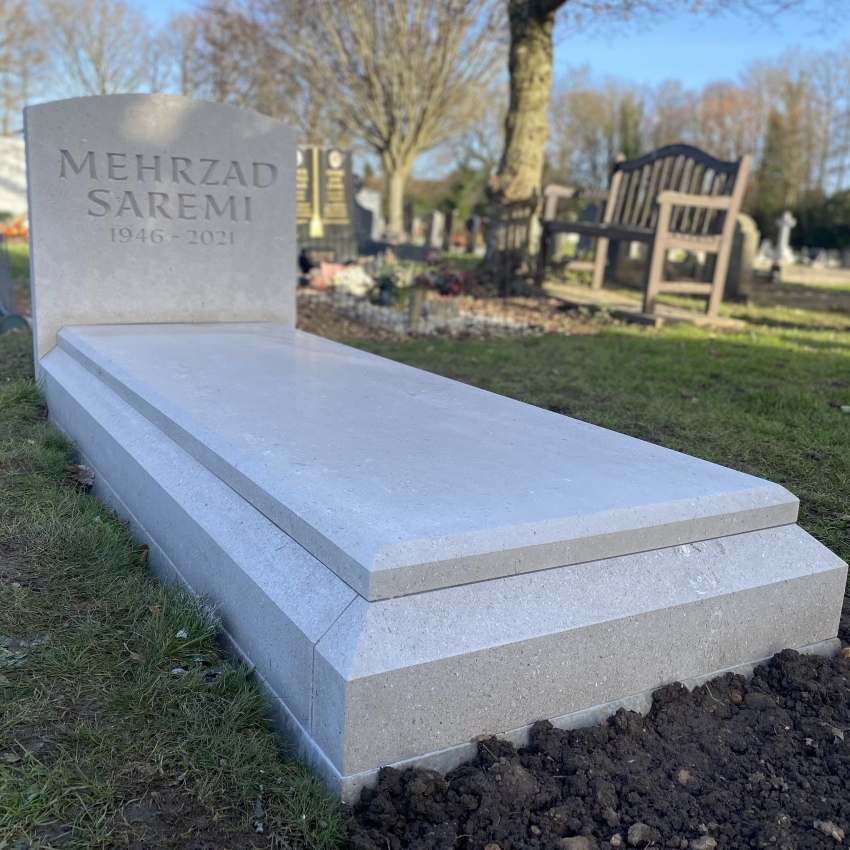
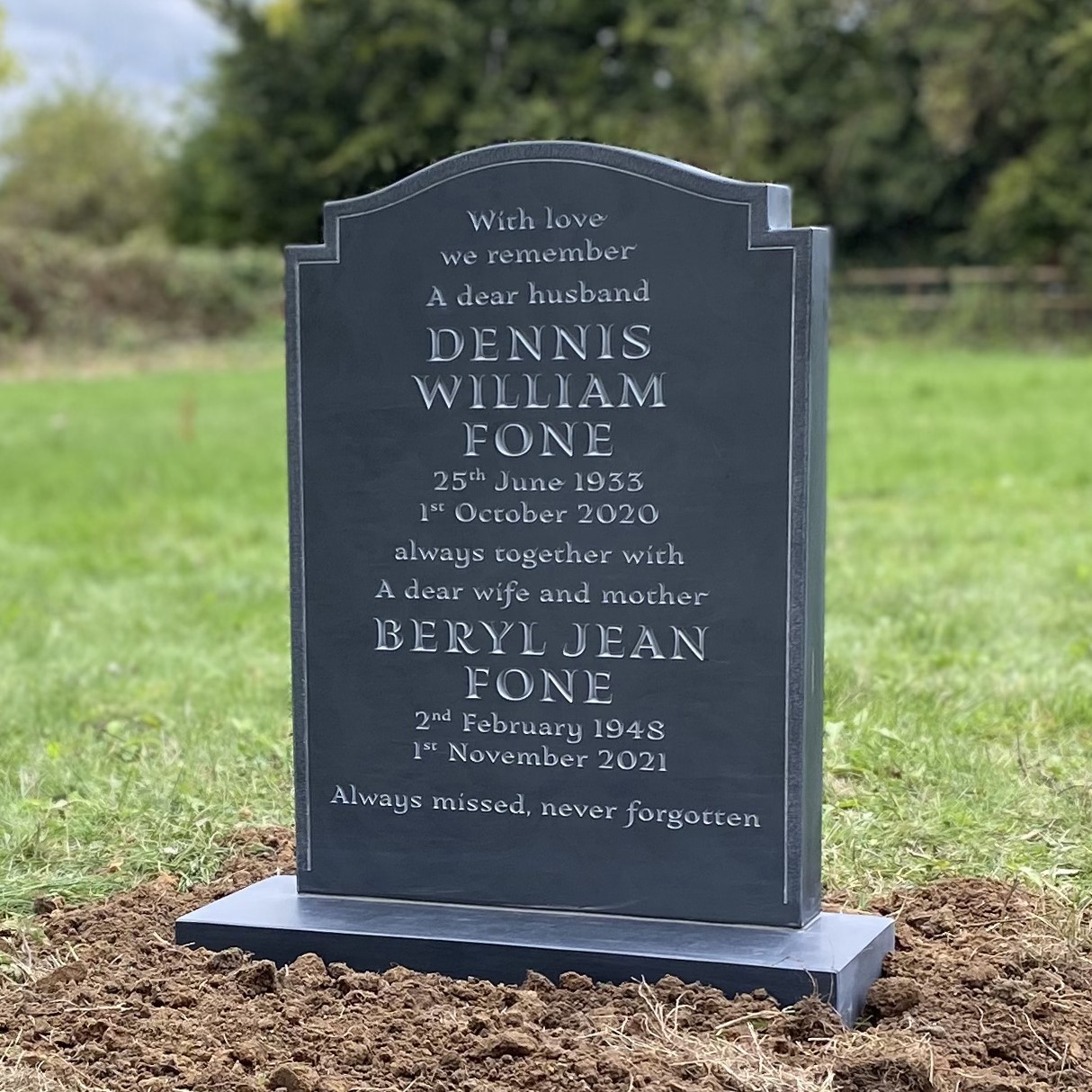
A traditional headstone is normally positioned at the head of the grave. It provides space for the name, dates, inscription and any carved artwork or other personal details chosen by the family.
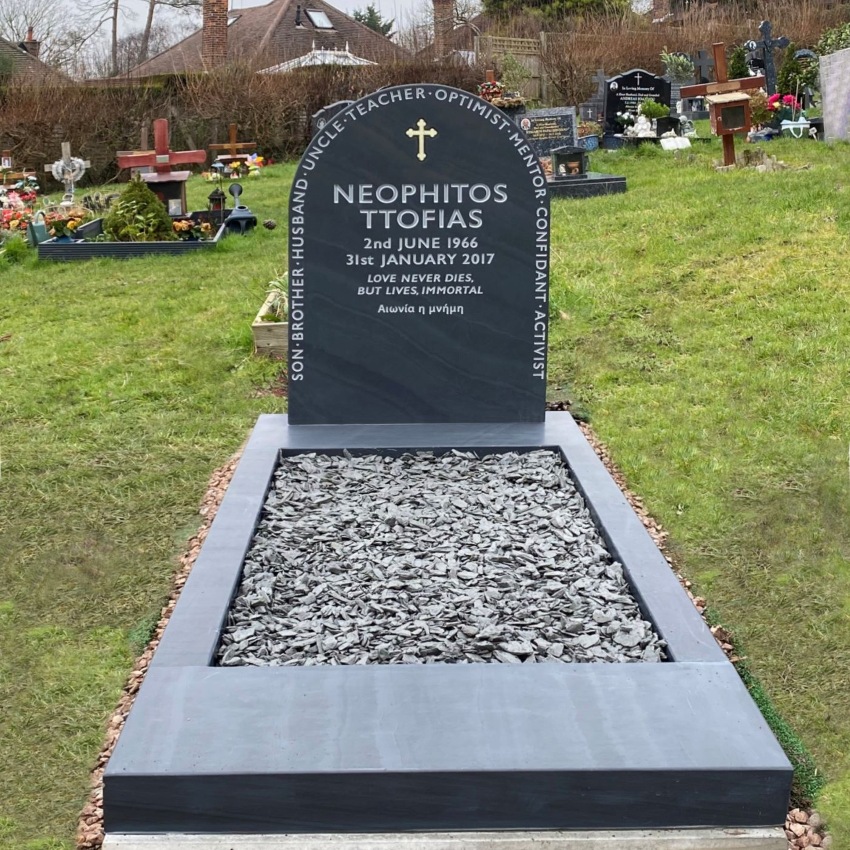
A kerbed memorial, sometimes called a kerb set, extends around the full footprint of the grave. It will often incorporate an upright headstone at the head of the plot, while the stone kerbs form a border around the grave itself. The area inside can then be planted, filled with decorative stone chippings or, depending on the design, covered partially or completely with stone.
Neither option is inherently better than the other. The right choice depends on the cemetery or churchyard, the appearance you prefer, the level of maintenance you are comfortable with, your budget and, most importantly, the type of memorial that feels right for the person being remembered.
For some families, the simplicity of a beautifully designed headstone is exactly what they want. Others prefer the greater presence and sense of completeness that a full kerbed memorial can provide.
What Is a Traditional Headstone?
An upright headstone remains one of the most familiar forms of grave memorial in the UK.
Although the basic format may be traditional, the finished design certainly does not need to be standard. The shape of the stone, the material selected, the lettering, inscription and carving can all be tailored to create something very individual.
A headstone can be created from a wide variety of natural materials, including slate, limestone, sandstone and granite. Each stone has its own character and behaves differently when it is carved and exposed to the weather over many years.
The design can be understated and formal or far more personal. Carved flowers, landscapes, religious symbols, animals, musical references, hobbies and other meaningful details can all become part of a memorial where the stone and burial ground regulations allow.
For families who want a clear, elegant focal point at the head of the grave without surrounding the entire plot in stone, an upright headstone can be an excellent choice.

When Might a Traditional Headstone Be the Right Choice?
A traditional headstone often suits families who want a relatively simple memorial while still having considerable freedom over the design.
The surrounding grave can remain grassed, planted or maintained in whatever way the burial authority permits, while the headstone provides the permanent memorial.
Cemetery and Churchyard Regulations
One of the most important practical considerations is where the memorial will be installed.
Every cemetery and churchyard can have its own regulations concerning the dimensions, materials, finishes and styles of memorial that are permitted.
Churchyards in particular may have more restrictive rules and may allow a simple upright headstone while not permitting a full kerbed surround.
It is therefore sensible to establish the regulations for the burial ground before becoming too committed to a particular design.
Maintenance of a Traditional Headstone
An upright headstone generally occupies less of the grave plot and usually involves less stone surface to clean and maintain.
This can be particularly relevant if family members live some distance away or know that they will not be able to visit and maintain the grave frequently.
Future Additional Inscriptions
It is also worth considering whether another inscription may need to be added at a later date.
Where a grave will eventually be shared by spouses or other family members, the original design should leave sufficient space for future lettering.
Planning for this from the outset helps ensure that a later inscription feels balanced and consistent with the original design.
When Might a Kerbed Memorial Be the Right Choice?
A kerbed memorial creates a more complete treatment of the grave by extending stone around the full plot.
This gives the memorial a stronger physical presence and can provide more scope for additional inscription, planting and decorative detail.
What Can Go Inside a Kerbed Memorial?
The centre of a kerbed memorial can be finished in several ways.
Some families choose decorative stone chippings, while others prefer soil and planting. A partial or complete stone cover can also be used, depending on the design and burial ground regulations.
The choice will affect both appearance and maintenance. Planting can create a softer, more natural look, while chippings or stone covers generally require less ongoing attention.
More Space for Memorial Design
A kerbed memorial can offer additional space for lettering and design beyond the upright headstone itself.
Depending on the memorial, inscriptions or decorative elements may also be incorporated into horizontal sections or a sloping plaque.
This can be particularly helpful where a family wants to include more wording or create a memorial for more than one person.
What Should You Consider Before Choosing?
The best way to choose between a headstone and a kerbed memorial is to think beyond appearance alone.
The memorial needs to work for the burial ground, for the family and for the years ahead.
Is a Kerbed Memorial Permitted?
This should be one of the first questions asked.
Some cemeteries permit full kerbed memorials while others restrict their size, materials or design. Churchyards are often more restrictive and may not allow kerb sets at all.
Checking the regulations early avoids designing a memorial that later needs substantial changes before permission can be granted.
How Much Maintenance Do You Want?
Think realistically about how often the grave is likely to be visited.
If you enjoy tending a grave and want seasonal planting to form part of the memorial, a kerbed surround containing soil may be particularly meaningful.
If the family lives some distance away or prefers something requiring less attention, a traditional headstone or a kerbed design using decorative stone or a cover slab may be more suitable.
Will Another Inscription Be Needed Later?
Future inscriptions are another important consideration.
If another family member may eventually be commemorated on the same memorial, sufficient space should be incorporated from the beginning.
A well-planned design can allow the later inscription to feel like a natural continuation of the original memorial.
What Stone and Style Feel Right?
Both traditional headstones and kerbed memorials can be produced in a wide variety of natural stones.
The decision should not be based on colour alone. Different materials weather differently and offer different possibilities for lettering, carving and finishing.
Most importantly, the finished memorial should feel appropriate for the person it commemorates.


Headstone vs Kerbed Memorial: Which Should You Choose?
If you are deciding between a headstone and a kerbed memorial, begin with three practical questions: what does the burial ground permit, how would you like the grave to look, and how much ongoing maintenance are you comfortable with?
A traditional headstone offers simplicity, elegance and considerable scope for individual lettering and carving. A kerbed memorial creates a more complete grave surround and offers greater scope for planting, decorative stone, additional inscriptions and a more substantial overall design.
Both can be completely bespoke.
The most successful memorial is not necessarily the largest or most elaborate. It is the one where the stone, lettering, proportions and personal details work together to create something that feels right.
We can guide families through the practical and creative decisions involved, from understanding cemetery requirements and choosing the stone through to design, carving and final installation.
If you are unsure whether a traditional headstone or a kerbed memorial would be most suitable, please contact us. We can discuss the burial ground, your ideas and the different options available before you make a decision.
If you would like advice on choosing the right memorial, please contact Artisan Memorials to discuss your ideas and the options available.
We work all over the UK, offering the complete service, from design to installation
08081960935


